

RV AC Maintenance: The Schedule That Keeps It Running All Season
A season by season maintenance schedule for your RV air conditioner, covering filters, coils, and the checks that actually prevent breakdowns.
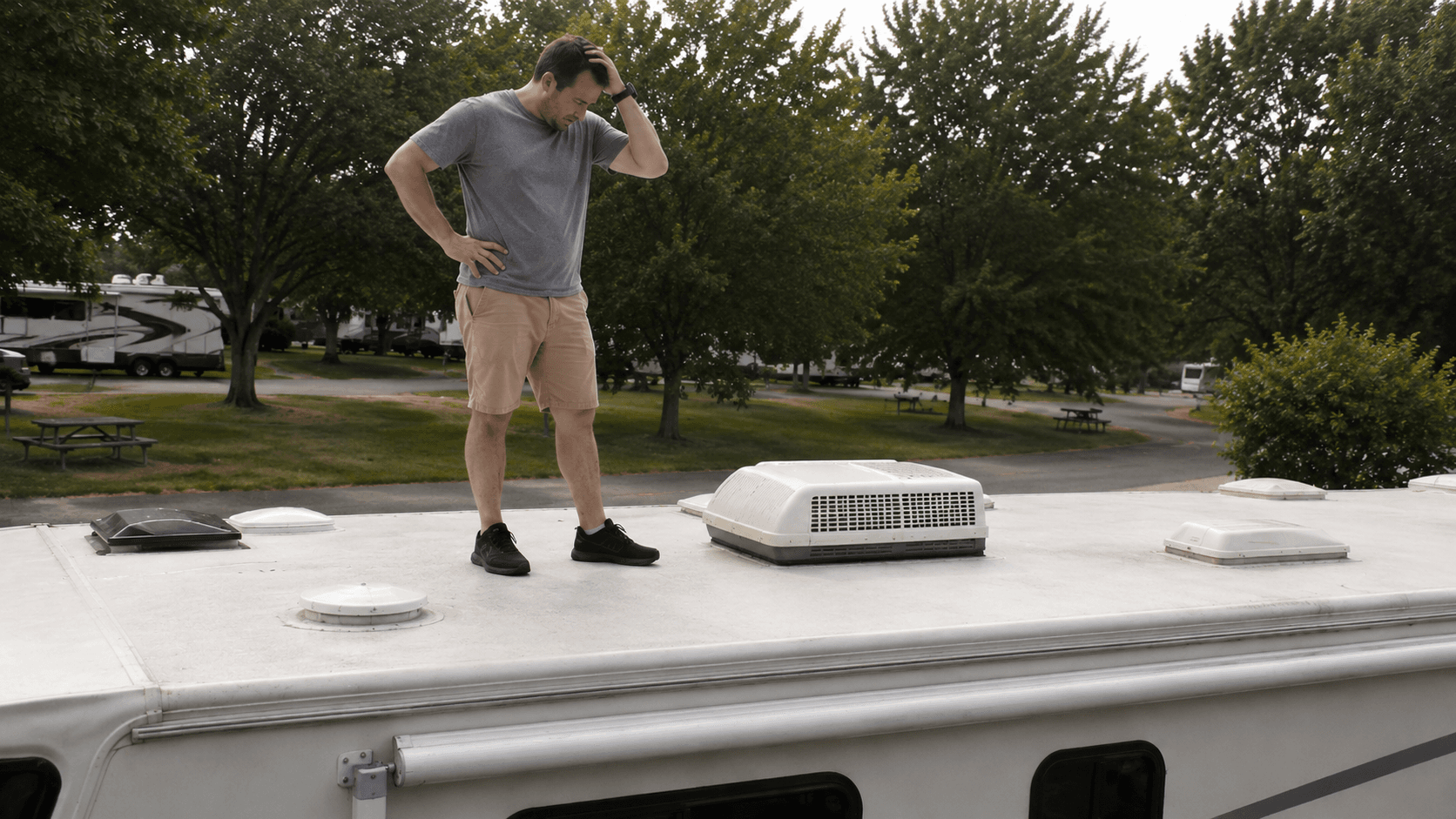
Most RV owners think about AC maintenance the same way they think about flossing. They know they should do it, and they mean to get around to it eventually. The problem is that "eventually" for an RV AC usually means never, and by the time the unit stops cooling right, you're already dealing with a repair instead of a five minute task.
The good news is that RV AC maintenance isn't complicated. It just needs to happen on a schedule instead of whenever you happen to remember, the same way the rest of your RV maintenance checklist works.
Why this actually matters
A neglected AC doesn't fail all at once. It fails gradually: a dirty filter restricts airflow, restricted airflow makes the coil work harder and eventually ice up, and an iced coil means warm air blowing out of your vents on the hottest day of your trip. Most of what shows up in RV AC troubleshooting guides traces back to one of a handful of maintenance steps that got skipped.
Tools you'll want on hand
You don't need a shop full of equipment for most of this. A soft-bristle brush or a can of compressed air handles filter and coil cleaning. A fin comb straightens bent coil fins before you clean them, since bent fins block airflow on their own regardless of dirt. An AC thermometer (analog or digital, sold at most auto parts stores) is what you'll use for the cooling performance test later on. If you're checking electrical components yourself, add a multimeter and a capacitance tester, though many RVers hire this part out as part of their regular RV service instead.
The schedule
Before each trip or the start of the season Pull the return air filter and hold it up to a light. If you can't see light through it clearly, clean it (see the monthly steps below) or replace it if it's torn or won't hold its shape. Walk the roof safely and check the shroud for cracks, sun damage, or missing screws. Clear leaves, pine needles, or any nesting material off the top and out from around the base of the unit, since debris here restricts airflow before you've even started the trip.
Monthly during heavy use Remove the filter (usually a simple slide-out behind the return air grille inside the RV). Vacuum off loose dust, then rinse it under running water if it's washable, and let it air dry completely before reinstalling. Never run the unit with a wet filter. According to Dometic's own support documentation for its Freshjet units, full-time users should clean the return air filter every two months, while seasonal campers can stretch that to every six months. Full-time or frequent use pushes toward the shorter end of that range.
Every six months Remove the roof shroud, noting the screw pattern so it goes back the same way. Use the fin comb to straighten any bent fins on the condenser coil before cleaning, since cleaning around bent fins doesn't fix the airflow problem they cause. Brush debris away from the coil in the direction the fins run, not across them, or use compressed air held a few inches back. Check the condensate drain opening for blockage and clear it if needed. Let everything dry before reattaching the shroud. This is the step most owners skip entirely, and it's the one that prevents the "not cooling like it used to" complaint.
Annually Check the seal (the gasket between the AC base and the roof) for cracking, gaps, or soft spots, since a failed seal means water intrusion, not just a cooling problem. If you're comfortable with basic electrical work and the unit is powered down, a capacitor can be checked with a capacitance tester and compared to its rated microfarad value. That said, many RVers fold this check into their regular RV service visit rather than doing it themselves, and that's a perfectly reasonable call given the electrical risk involved. Either way, if the unit hasn't had a professional look in a while, this is the year to schedule one.
What to DIY and what to leave to a pro
Filter cleaning and coil cleaning are well within reach for most owners with basic tools and a ladder. Capacitor replacement and anything involving refrigerant should go to a certified tech. If you're not sure which category a symptom falls into, that's usually a sign to call someone rather than guess.
How to test if it's actually cooling right
Cleaning and checking parts is only half the picture. The other half is confirming the unit is performing the way it should, and that's what the temperature split test is for. Turn off the RV's power first so the unit doesn't kick on mid-setup, then confirm the filter and coils are already clean, since a dirty unit will fail this test regardless of how well it otherwise runs. Turn the power back on, set the AC to high cool, and let it run for at least 15 minutes to stabilize. Using your AC thermometer, measure the air temperature at the return air grille (where the filter sits), then measure it again at the nearest supply vent. According to RV DIY's testing procedure, a properly functioning unit should show a difference of roughly 16 to 22 degrees between those two readings. A smaller split points toward one of the maintenance issues above, most often a dirty filter or coil, or reduced refrigerant that needs a professional look.
When it stops being maintenance
If you're doing all of this and the unit still isn't cooling right, you've moved from prevention into diagnosis. That's a different problem with a different set of steps, covered in our RV AC troubleshooting guide.
Keeping track of it
This is exactly the kind of schedule that's easy to agree with and hard to actually follow, since none of these tasks are urgent until suddenly one of them was overdue by two years. RVKeeper tracks AC maintenance intervals alongside the rest of your RV's systems, so you get a reminder instead of a surprise.
Ready to stop guessing at intervals? Check RVKeeper's free Essentials plan and see what it's already tracking for your rig.
RVKeeper
Track your AC maintenance intervals automatically
RVKeeper tracks your air conditioner's filter, coil, and condensate drain intervals alongside the rest of your rig's systems, so each check is scheduled around your specific unit instead of your memory.
Download RVKeeper
Personalized maintenance tracking built around your specific rig.
Frequently asked questions
How often should I clean my RV AC filter?
Check it monthly if you're using the AC heavily or full-timing. If you're a seasonal or occasional camper, every few months is usually enough. When in doubt, check it more often rather than less, since a dirty filter is the most common cause of AC problems.
Can I clean my RV AC myself, or does it need a professional?
Filter and coil cleaning are well within reach for most owners with basic tools. Anything involving the capacitor, refrigerant, or electrical diagnostics is better left to a certified RV technician.
What happens if I skip AC maintenance for a season or two?
Airflow gradually gets restricted, which makes the unit work harder and can lead to icing or reduced cooling. It usually doesn't cause sudden failure, but it does shorten the unit's lifespan and makes a small fix into a bigger one.
How do I know if my AC filter needs replacing instead of cleaning?
If the filter is torn, sagging, or no longer holds its shape after cleaning, it's time to replace it rather than keep washing it. Most filters can be cleaned many times before replacement is necessary.
Is it normal for an RV AC to run constantly in summer heat?
Yes, especially in high heat or humidity, the compressor may run near continuously to keep up. If it's running constantly and still not cooling well, that points to a maintenance or airflow issue rather than normal operation.
Do I still need annual service if the unit seems to be working fine?
Yes. Annual checks catch things like worn seals and early coil buildup before they turn into performance problems, even if the unit feels fine day to day.
What is a good temperature split for an RV AC?
A properly working unit typically shows a difference of about 16 to 22 degrees between the air entering the return vent and the air coming out of the nearest supply vent, measured after the unit has run on high cool for at least 15 minutes. A smaller split usually points to a maintenance issue like a dirty filter or coil rather than a major failure.
What's the difference between AC maintenance and AC troubleshooting?
Maintenance is what you do on a schedule to prevent problems. Troubleshooting is what you do once something's already wrong, like the unit not cooling or the compressor not starting. If you're doing regular maintenance and still running into problems, it's time to move to troubleshooting.